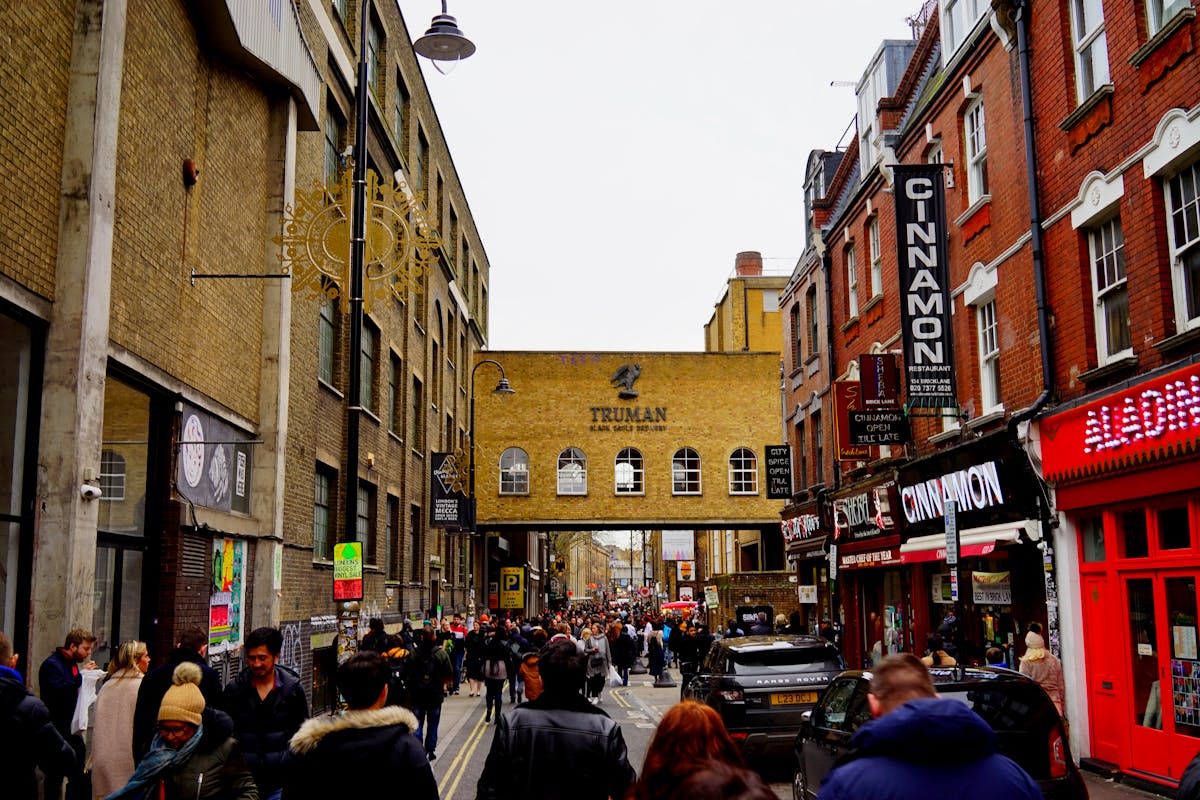
There is a particular kind of chaos that descends on Brick Lane on a Friday evening. The smell hits you first – a thick, gorgeous cloud of cumin and fenugreek and charred bread that drifts somewhere between the vintage shops and the bagel bakery and settles over everything like a warm blanket. Then come the men. Smartly dressed, relentlessly cheerful, armed with laminated menus and an almost supernatural ability to make eye contact with a tourist from forty feet away.
“Best curry in London, madam. Sit down, sit down – first drink free.”
I have been going through this street since I was old enough to walk it without holding my mum’s hand, and I want to tell you something important: the best curry on Brick Lane does not come with a free drink. It does not come with a man outside waving a menu at you. It comes with a wait, sometimes a queue, and a very honest plate of food that has absolutely nothing to prove. This is what I know. This is what took me years to figure out. You are welcome.
The Art of the Gauntlet
Brick Lane’s curry strip runs roughly from the junction with Bethnal Green Road down toward Whitechapel, and on any given evening it is one of the most intense dining corridors in the whole of London. At peak hours – say seven o’clock on a Saturday – you will be approached, on average, by five to eight restaurant representatives before you have walked fifty metres. This is not an exaggeration. I have counted.
Why the touting exists
The economics here are real. Brick Lane’s curry restaurants – and there are dozens of them – are competing for a finite pool of diners on a relatively short stretch of road. Many of the restaurants look similar from the outside, carry similar menus, and occupy similar price points. The person outside with the laminated card is not a gimmick; they are a commercial necessity. Understanding that takes the edge off the experience considerably and turns it from something that feels like harassment into something that feels, at worst, like theatre.
Most of the restaurants touting are not bad restaurants. Some of them are genuinely very good. The problem is that the loudest presence outside does not always correlate with the best presence in the kitchen – and on Brick Lane, you need to know which is which before you sit down.
How to walk the strip without losing your nerve
The golden rule is simple: keep moving and smile. The touts are professionals and they respect a decisive stride. Do not stop to look at the menu being thrust toward you – that is the moment you have already lost. Do not make eye contact for longer than a brief, polite nod. And never, under any circumstances, allow yourself to be seated at an outside table without having already decided that this is the restaurant you want.
The second golden rule, and arguably the more important one: decide where you are going before you arrive on the street. Walk purposefully to your destination rather than drifting toward whichever restaurant pulls you in first. A little preparation removes the guesswork entirely and means you can actually enjoy the spectacle instead of being swallowed by it.
The Restaurants That Have Earned It
There are restaurants on Brick Lane that have been feeding this neighbourhood for decades. They do not need to shout. They are full on a Tuesday night because they are genuinely good, and they are genuinely good because they have been doing this long enough to know exactly what they are doing and have no interest in cutting corners.
The stalwarts worth knowing
Aladin on Brick Lane is one of those places. It has been on the street since 1978 and the menu is a masterclass in Bangladeshi cooking done with confidence and without apology. The lamb bhuna is rich and slow – the kind of dish that makes you understand why people return to the same restaurant for thirty years. The prices are honest. The naans are enormous. The decor is, let us say, purely functional – but you are not here for the decor.
A short detour off the lane itself will bring you to Tayyabs on Fieldgate Street, which technically sits just outside the Brick Lane strip but belongs in every conversation about this neighbourhood’s curry culture. The lamb chops – charred, smoky, aggressively spiced – have a cult following that crosses every demographic in East London. There is almost always a queue. The queue is almost always worth it, and the dining room, when you finally get into it, has the wonderful noise of a place where everybody is having a good time.
The quieter places doing something special
What I find increasingly interesting about the current state of Brick Lane is that some of the most rewarding food is happening at the quieter end of the street – in the smaller, less theatrical places that don’t have anyone outside at all and don’t appear to need them. These are often restaurants run by families who have been cooking the same dishes since the eighties and have absolutely no interest in modernising, because nothing about what they do requires modernising.
Look for the places with handwritten specials on a chalkboard inside. Look for the restaurants where the clientele is predominantly Bangladeshi. These are your most reliable indicators that something genuinely good is happening in the kitchen, and they are worth seeking out even if finding them requires a bit more effort than simply following the loudest voice on the pavement.
What You Should Actually Order
The Brick Lane menu – across almost every restaurant on the strip – is a familiar document. Starters of onion bhaji and sheek kebab, a middle section of tikka masalas and kormas and baltis, a bread section, a rice section, and a dessert section that almost everyone ignores in favour of a second naan. This is the standard format and there is nothing wrong with it. But if you eat only the dishes you already know, you will miss the entire point of being here.
The dal situation
Dal is the dish I always order first at any curry restaurant, and the reason is simple: it tells you everything. Not the showiest item on the menu, not the one with the most dramatic description – the dal. A good tarka dal, made with yellow lentils and finished with a hot, fragrant tadka of garlic and whole cumin in smoking oil, is one of the most deeply satisfying things you can eat anywhere in London. A bad one is thin and apologetic and tastes of very little. On Brick Lane, the dal will tell you within three mouthfuls whether the kitchen knows what it is doing.
Order it as a side dish regardless of what else you have chosen. Eat it with the naan. You will not regret this.
Beyond the tikka masala
The dishes most worth seeking out on Brick Lane are the regional Bangladeshi ones that don’t always receive top billing on the menu. Hilsa fish curry – hilsa being a prized freshwater fish from the rivers of Bangladesh and West Bengal – appears on menus seasonally and is genuinely unlike almost anything else available in London. It is mustard-heavy and sharp and fragrant and not remotely like the creamy, mild curries that dominate the tourist end of any menu. When it is available, it is worth every penny and then some.
Ask whether they have it. If they do, order it immediately and without hesitation.
The Unwritten Rules of Brick Lane
Every street has its code and Brick Lane is no different. There are a few things a local absorbs over years of eating here that the guidebooks and review sites don’t tend to mention, and I feel a genuine sense of civic responsibility to share them.
Timing changes everything
Avoid the eight o’clock rush on Friday and Saturday evenings unless you thrive under pressure with several people competing for your attention simultaneously. The sweet spot for a genuinely enjoyable experience is early – six o’clock or just before – when the kitchens are fresh, the dining rooms are not yet full, and the touting outside has not yet reached its full intensity. Alternatively, come at lunch. Monday to Thursday lunchtimes on Brick Lane are a completely different experience: quieter, often cheaper, and considerably less theatrical in the best possible way.
Sunday afternoons are also quietly wonderful. The market crowd has thinned out by midafternoon, the street recovers something of its own character, and you can take your time over a meal without feeling as though you are part of a production.
The practical details that actually matter
A few practicalities worth knowing. Several of the smaller restaurants on Brick Lane are BYOB – bring your own alcohol – which a corner shop just off the main strip will happily solve for you. Cash is still strongly preferred in a number of the older establishments, so it is worth having some on you before you arrive. And it is always worth asking whether a set menu is available: several of the stalwart restaurants offer fixed-price options at lunch and early evening that represent extraordinary value and remove the paralysis of a very long menu.
One final thing – and this matters more than it sounds. If a restaurant brings your naan out pre-sliced on a plate, that is information. The naan should arrive whole, fresh off the tawa, slightly charred on the underside, and large enough that you have to make a decision about how to hold it. Anything less and you may want to quietly reconsider your choice of table.